 Brindlefield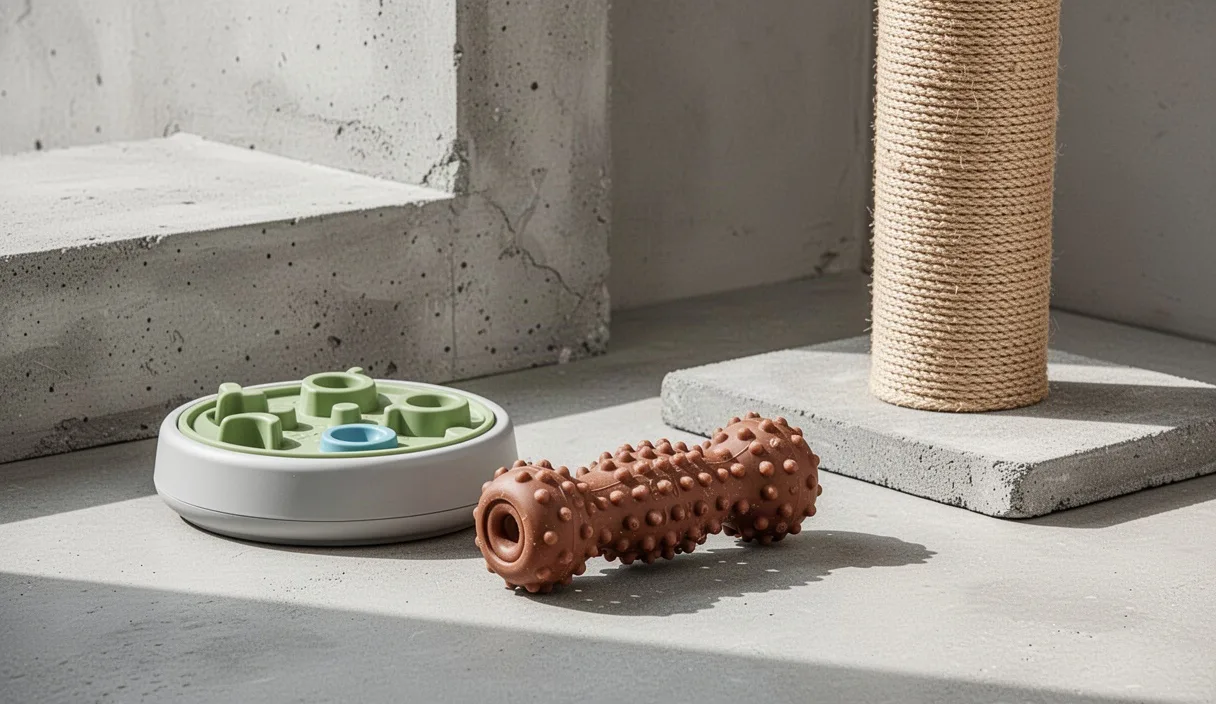
Enrichment toys get sold as a single category, but a puzzle feeder and a scratching post solve completely different problems. One slows down eating and works the brain. One protects furniture and lets a cat stretch its spine. Buying the wrong one for the behavior you're trying to fix wastes money and doesn't fix anything.
This article breaks down four toy types by what they physically do, not by what the packaging claims. You'll get material specifics, rotation schedules, and a list of what to skip when nobody's home to supervise.
What a Puzzle Feeder Actually Solves
A puzzle feeder is a container that makes an animal work for food instead of eating from a flat bowl. The mechanism varies: sliding panels, treat balls that release kibble when rolled, or maze-shaped inserts that force a dog to nose the food around a track. The point is time and effort, not entertainment.
Dogs that finish a bowl in 90 seconds and then pace, bark, or dig at the door are often bored, not hungry. A slow-feeder maze can stretch that same meal to 8-12 minutes. That's not a support anxiety or a chewing habit, it's a way to occupy the mouth and brain during a window that used to be empty.
Cats respond to a different version: food-dispensing balls or paper-based puzzle boxes that mimic hunting. A cat that free-feeds from a bowl all day and then attacks ankles at 6 a.m. may need to work for smaller, more frequent portions instead. Splitting a daily ration across two puzzle feeders, morning and evening, changes the pacing of the whole day.
Puzzle feeders are not appropriate for animals with resource guarding around food. If a dog growls or stiffens near a regular bowl, adding a feeder that takes longer to empty can increase frustration instead of reducing it. Talk to a veterinary behaviorist before introducing food puzzles in a multi-dog household with any guarding history.
Stuffable Toys and Long-Duration Chewing
Stuffable rubber toys, the classic hollow-core design, are built for one job: holding food or paste inside a durable shell so an animal has to work at it with tongue and teeth for an extended period. This is different from a puzzle feeder in duration. A puzzle feeder might take 10 minutes. A well-packed stuffable toy, frozen solid, can occupy a dog for 30-45 minutes.
The freezing step matters. Peanut butter or plain yogurt packed into the toy and frozen overnight turns a 5-minute snack into a real chewing session, because the dog has to melt and work the filling out gradually. Unfrozen, the same filling disappears in under two minutes and the toy becomes pointless.
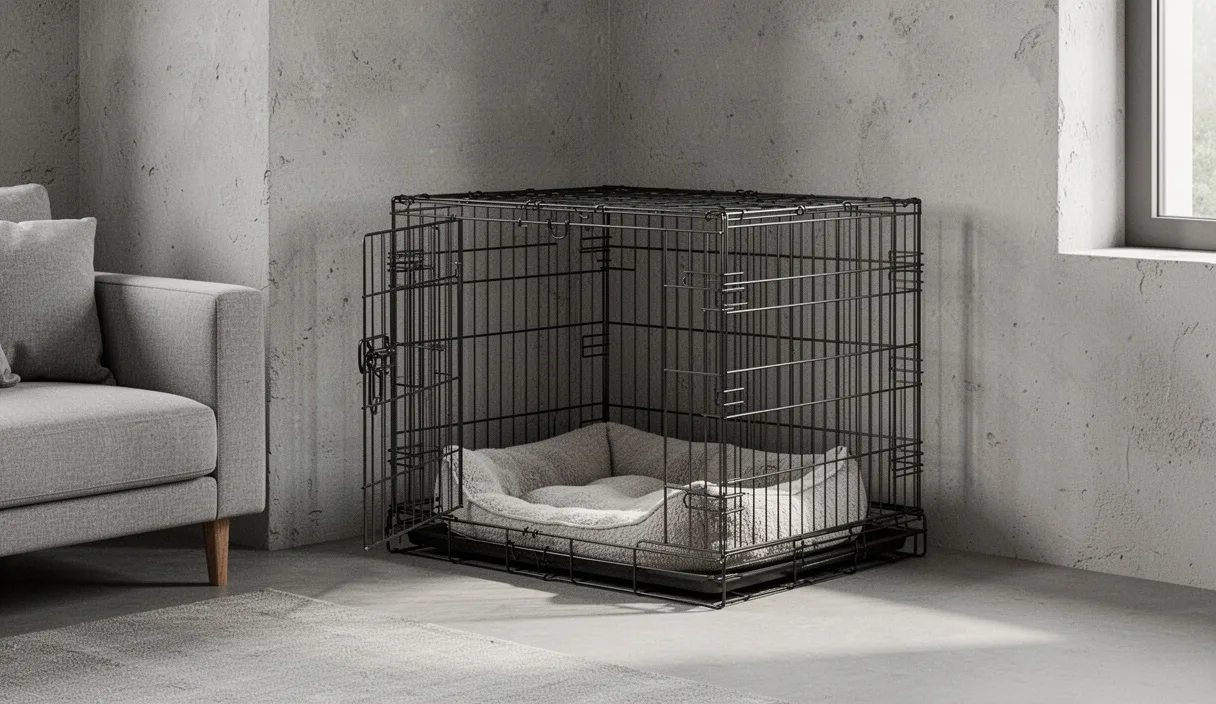
These toys matter most for dogs left alone for 4+ hours, or for dogs recovering from injury who need mental occupation without physical exertion. A vet who recommends crate rest after surgery will often suggest a frozen stuffable toy specifically because it tires the brain without using the legs.
Rubber hardness matters. A toy rated for a Labrador's bite force will barely register interest from a Chihuahua's teeth, and a toy sized for a toy breed will get crushed in seconds by a mastiff-type jaw. Match the hardness rating printed on the packaging to the dog's weight class, not just its age.
Scratcher Materials: Sisal, Cardboard, and Carpet
Scratching is not optional behavior for cats. It sheds the outer nail sheath, marks territory with scent glands in the paw, and stretches the back and shoulder muscles. The question isn't whether a cat will scratch, it's whether it scratches the couch or a designated post.
Material choice changes which cats actually use the scratcher:
| Material | Texture | Best for | Durability |
|---|---|---|---|
| Sisal rope | Coarse, rough | Cats that dig deep, vertical scratchers | High, lasts 1-2 years with daily use |
| Corrugated cardboard | Soft, shreddable | Cats that prefer horizontal scratching | Low, replace every 2-3 months |
| Carpet | Looped or cut pile | Kittens transitioning from furniture | Medium, but can encourage carpet scratching elsewhere |
Carpet-covered posts carry a specific risk: a cat that learns to scratch carpet on a post can extend that behavior to actual carpeted floors. If a household has wall-to-wall carpet, sisal or cardboard is the safer default.
Orientation matters as much as material. Some cats scratch vertically, stretching upward on a door frame or post. Others scratch horizontally, dragging claws across a flat surface. Watching where a cat already scratches on furniture, upright arm versus flat cushion, tells you which orientation to buy before wasting money on the wrong shape.
Rotation: Why the Same Toy Loses Its Effect
A toy that worked for two weeks and then got ignored isn't broken. Most pets habituate to a fixed object within 10-14 days of constant exposure. The toy stops being novel, and novelty is a big part of what drives engagement in the first place.
A simple rotation system: keep 6-8 toys total, but only 2-3 out at any time. Swap the visible set every 4-5 days, storing the rest in a closed bin. The pet re-encounters a toy after two or three weeks as if it's new, because scent and visual memory of objects fade faster than owners expect.
This applies less to scratchers, which are functional fixtures rather than novelty objects, and more to puzzle feeders, stuffable chews, and soft toys. A dog that abandons a specific puzzle feeder after a week hasn't necessarily solved it completely, it's just stopped finding the challenge interesting at that difficulty level. Moving to a harder version of the same brand, rather than a totally different toy, sometimes restores engagement better than rotation alone.
Matching a Toy to a Specific Behavior Problem
Buying enrichment toys at random rarely fixes a named problem. Matching the toy mechanism to the specific behavior gets better results.
- Destructive chewing when left alone: frozen stuffable toy given right before departure, timed to last close to the length of the absence.
- Fast eating and regurgitation: slow-feeder bowl or maze insert, not a treat-dispensing ball, since the goal is pacing every bite, not occasional bursts of activity.
- Furniture scratching: vertical sisal post placed directly next to the furniture being scratched, then gradually moved to a preferred location over 2-3 weeks.
- Excess energy before bedtime: 10-minute puzzle feeder session an hour before the usual sleep time, not a chew toy, since the goal is mental fatigue rather than continued mouth activity right before rest.
- Separation-related pacing or vocalizing: enrichment toys help as a distraction but do not address the underlying anxiety. A veterinary behaviorist should evaluate true separation anxiety before relying on toys alone.
Notice that none of these matches are interchangeable. A treat ball won't fix furniture scratching, and a scratching post won't slow down fast eating. Diagnosing the actual behavior before shopping saves money on toys that sit unused in a drawer.
Toys to Avoid for Unsupervised Time
Some enrichment toys are fine with supervision but risky when a pet is left alone with them for hours.
- Rawhide chews: can soften and be swallowed in large pieces, creating a choking or intestinal blockage risk. Fine for supervised chewing sessions under 20 minutes, not for all-day access.
- Rope toys with frayed strands: loose fibers can be ingested and, in some cases, cause linear foreign body obstructions requiring surgery. Inspect weekly and discard once fraying starts.
- Small squeakers removed from plush toys: a dog that destuffs a toy to get at the squeaker can swallow the plastic mechanism. Squeaky toys need supervision, not unattended access.
- Antlers and hard nylon bones for aggressive chewers: can fracture teeth, particularly molars, in dogs that chew with high bite force. A vet dental check after any hard-chew injury is worth scheduling promptly.
The general rule: if a toy can be broken into swallowable pieces within a single chewing session, it belongs in the supervised category only. Frozen stuffable rubber toys and dense sisal posts are lower risk precisely because they resist being reduced to fragments quickly.
Common mistakes
Buying one toy and expecting it to solve every behavior at once. A single puzzle feeder won't fix destructive chewing, separation pacing, and boredom barking simultaneously, because those are three different problems needing three different tools.
Leaving the same toy out permanently and assuming disinterest means the pet "doesn't like toys." More often it means the object has become invisible through overexposure, and a rotation schedule would restore interest.
Choosing scratcher material based on owner preference for appearance rather than the cat's demonstrated scratching orientation and texture preference. A tidy-looking carpet post that the cat ignores in favor of the couch has failed at its one job.
Getting started
Start by naming the specific behavior that's driving the purchase: fast eating, boredom chewing, furniture scratching, or excess evening energy. Buy one toy matched to that behavior, not three toys matched to a general idea of enrichment.
Test it for two weeks. If a puzzle feeder or chew toy isn't reducing the target behavior in that window, the toy type may be wrong, not the brand. Reassess which mechanism, pacing, scent-based hunting, or physical stretching, actually addresses the root behavior before buying a replacement.
For any behavior involving anxiety, aggression, or sudden changes in eating or scratching patterns, a toy is a management tool, not a diagnosis. A veterinarian or certified veterinary behaviorist should evaluate persistent or worsening behavior before you rely on enrichment products alone to fix it.