 Brindlefield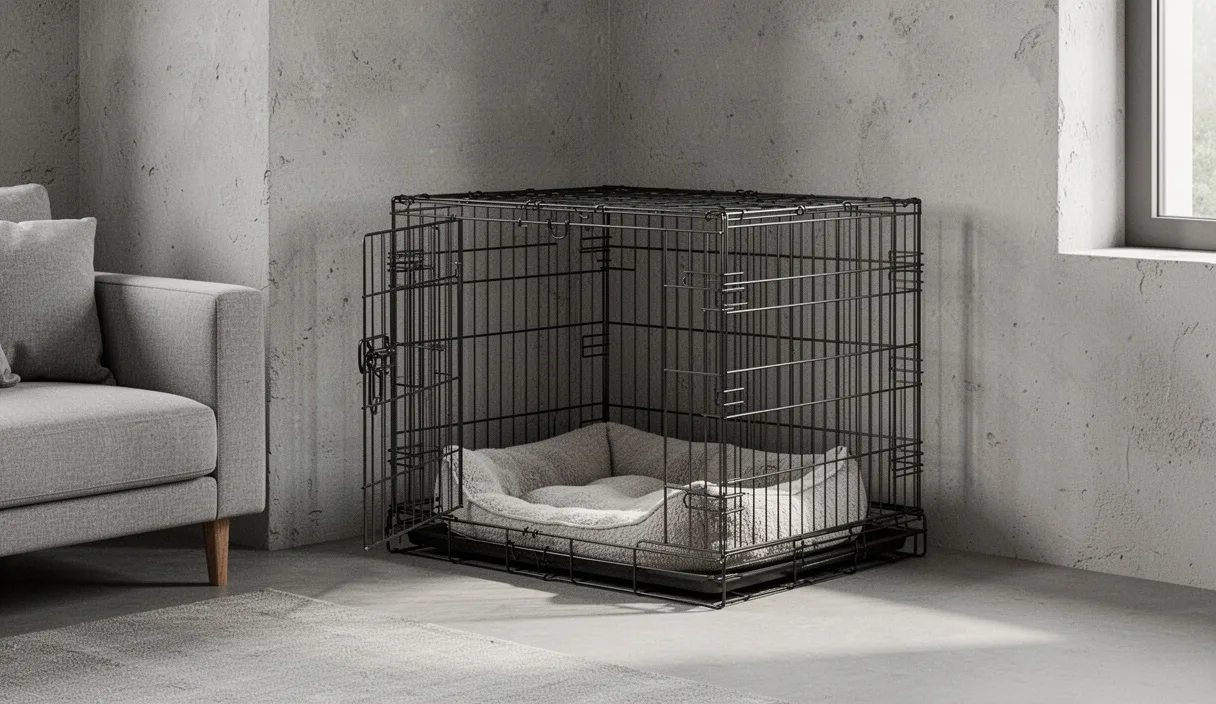
A crate is a box with a door. It is not a punishment tool and it is not a permanent living space. Used correctly, it gives a dog a place to settle that is small enough to feel secure and safe enough to be left unsupervised for short periods. Used badly, a crate becomes a place the dog fights to avoid, and that fight can last for months.
This routine breaks crate training into six stages, from the first five minutes with the door off to a full night of crating. Each stage has a clear marker for when to move forward and when to go back a step. Follow the order. Skipping ahead because a dog seems calm on day two is the most common reason crate training stalls.
Why Timing the First Introduction Matters
The first session sets the dog's baseline opinion of the crate. If that session happens when the dog is wound up, hungry for attention, or overtired, the crate gets tagged as the place where bad feelings happen. Pick a time when the dog is naturally slowing down: after a walk, after a meal, in the early evening lull most dogs have.
Remove the door for the first three to five sessions, or prop it fully open against the wall so it cannot swing and startle the dog. A door that clicks shut on session one, even by accident, can undo a week of progress. The goal at this stage is exposure without any barrier, so the dog can walk in and out at will.
Place the crate in a room the household already spends time in, not in a basement or laundry room. A dog crated in isolation from day one associates the crate with being cut off from the group. Living room or kitchen placement, where the dog can still see and hear people, works better for the first two weeks. The crate can move to a quieter spot later once the dog is comfortable.
Using Food to Build a Positive Association
Food is the fastest way to change how a dog feels about a space. Start by tossing a few pieces of plain kibble or small training treats just inside the crate door, then a few more toward the back. Let the dog walk in, eat, and walk back out. Do not close anything. Repeat this three or four times a day for two to three days.
Once the dog enters without hesitation, feed one full meal a day inside the crate with the door open. A dog that eats a 15-minute meal inside the box, calmly, is telling you the space itself is no longer the problem. If the dog stops eating and backs out partway through, the pace was too fast; return to tossed treats for another day.
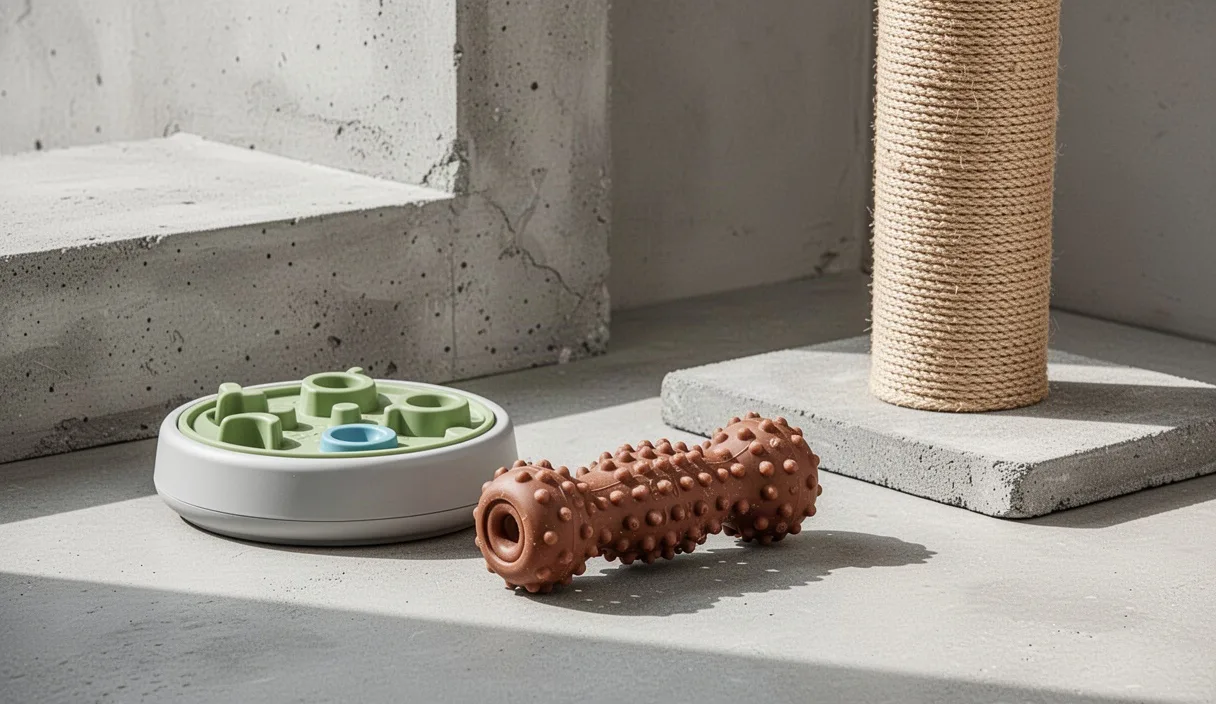
A stuffed food toy works as a bridge between meals. A rubber toy packed with wet food or peanut butter (unsalted, no xylitol) and left in the crate gives the dog a reason to stay past the point of finishing a simple meal. Ten to fifteen minutes of chewing inside the crate, door open, is a reasonable target before moving to the next stage.
- Session 1 to 3: tossed treats, door removed or propped open, no closing.
- Session 4 to 6: one full meal fed inside, door still open.
- Session 7 onward: stuffed toy for 10 to 15 minutes, door open.
Extending Time in the Crate Gradually
Time inside the crate should grow in small increments, not big jumps. A dog that tolerates 15 minutes with a chew toy is not automatically ready for two hours. Add time in blocks of 10 to 15 minutes, and only after the dog has settled calmly for the previous block on at least two separate occasions.
A rough progression for a young adult dog with no prior crate anxiety might look like this over ten days:
| Day | Time in crate | Door status |
|---|---|---|
| 1 to 3 | 5 to 15 minutes | open |
| 4 to 6 | 20 to 30 minutes | open, then closed briefly |
| 7 to 8 | 45 to 60 minutes | closed |
| 9 to 10 | 2 hours | closed |
Puppies need a different scale, mostly because of bladder control, not temperament. A general guide is the puppy's age in months plus one, in hours, as a rough ceiling for daytime crating: a three-month-old puppy tops out around four hours, not counting overnight. Pushing past that ceiling risks a soiled crate, which creates a separate problem, since dogs generally avoid soiling a space they consider their own unless forced to.
Adding the Door: Closed but Not Locked
The first closed-door session should be short, on the order of 30 to 60 seconds, and should happen right after the dog has settled with a chew toy, not right when the dog walks in. Close the door, stand next to the crate, wait through a few calm seconds, then open it before the dog asks to leave. Ending the session on your terms, before the dog pushes at the door, keeps the dog from learning that pushing works.
Watch for the difference between mild protest and real distress. A dog that whines once and then settles is adjusting. A dog that scratches at the door, barks continuously, or drools heavily is over threshold, and the session length needs to drop back to whatever the dog last handled calmly. Opening the door in response to barking, even to "just check," teaches the dog that barking opens doors.
Build up closed-door time in the same small increments as before: 1 minute, then 3, then 5, then 10, always with the chew toy or meal as the backdrop activity. Somewhere between 20 and 30 minutes of calm closed-door time is a reasonable point to start leaving the room for a few seconds at a time, then a minute, then longer.
Moving to Overnight Crating
Overnight crating is a different task from daytime crating because there is no active supervision and no chew toy to occupy the dog for eight hours. Do not attempt a full night until the dog has managed at least two or three hours of closed-door crating during the day without distress.
Placement matters more at night. A crate next to the owner's bed, at least for the first two to four weeks, lets a puppy hear breathing and movement, which reduces the isolation that triggers nighttime crying. Moving the crate to another room can happen gradually later, a few feet at a time over several nights, rather than all at once.
Puppies under four months old will very likely need at least one nighttime bathroom break. A reasonable approach is to take the puppy out the moment it wakes and whines, without play or extended talking, then straight back into the crate. Rewarding a 2 a.m. bathroom trip with attention or playtime teaches the puppy that waking up is worth it for reasons beyond the bathroom.
Adult dogs with no medical issues can often go a full night, six to eight hours, once the daytime work is solid. A dog that suddenly starts needing frequent nighttime bathroom breaks after previously sleeping through the night should see a veterinarian, since this can signal a urinary tract infection, kidney issue, or other medical cause rather than a training gap.
Common Setbacks and How to Reset
Regression happens, and it does not mean the earlier work failed. A house move, a new pet in the household, a period of illness, or even a schedule change (someone home all day, then suddenly gone) can bring back crying or scratching at a stage the dog had already passed.
The reset rule is simple: drop back to the last time and door setting the dog handled without distress, even if that means going back to an open door for a few sessions. Rebuilding from a known good point takes far less time than the original training did, often just two or three days rather than two or three weeks.
A dog that has a genuinely bad experience in the crate, such as being crated during a thunderstorm or a smoke alarm going off, may need a slower rebuild than a dog whose regression came from simple disuse. In these cases, starting again with food-only sessions and no closed door for the first two or three days resets the association before time increases.
Common mistakes
Closing the door on the very first session is the single most frequent error, and it usually happens because the dog seemed fine. Using the crate as a punishment, sending the dog there after a chewed shoe or a bathroom accident, teaches the dog to associate the crate with trouble rather than rest. Leaving a dog crated for longer than its age or training history supports, then being surprised by barking or soiling, is another common pattern; the crate did not fail, the timeline did.
What to do next
Start today's session with the door open and a handful of treats, even if the dog has used a crate before at a shelter or breeder's home; that history does not carry over automatically to a new house. Track each session's length and the dog's behavior in a simple log for the first two weeks, since patterns of regression are easier to spot on paper than from memory. If a dog shows signs of panic, such as bloody paws from scratching, self-injury against the crate bars, or complete refusal to eat inside the crate after ten or more sessions, stop the routine and consult a veterinary behaviorist or a certified professional dog trainer before continuing on your own.