 Brindlefield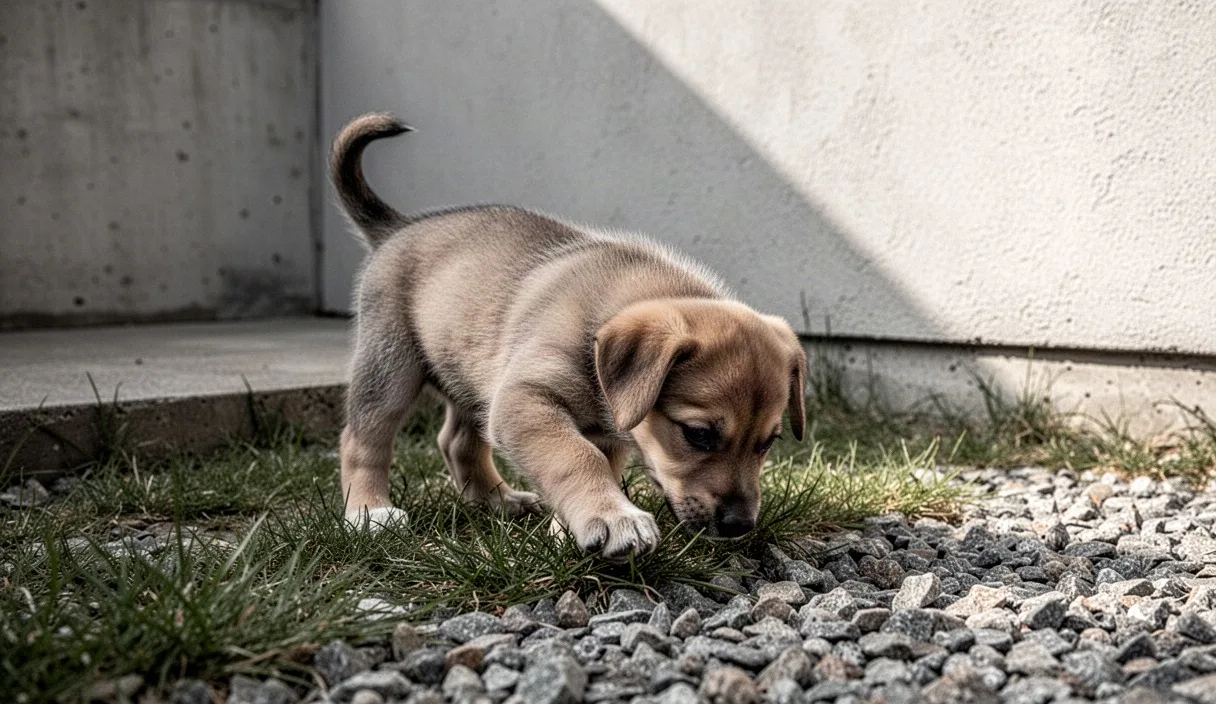
A puppy's brain accepts new information differently before sixteen weeks than it does after. This is not a training theory, it is a biological window documented in canine behavior research going back to the 1960s. What a puppy meets calmly during this window tends to stay filed under "normal." What it meets for the first time after the window tends to get filed under "suspicious." That single filing difference explains most of the fearful or reactive adult dogs seen in behavior consults.
This checklist breaks the window into concrete categories: sounds, surfaces, animals, and handling. Each section lists specific items, a rough schedule, and the mistakes that undo the work. Use it as a working document, not a test to pass. A puppy who wobbles on a metal surface once is not failing socialization. A puppy who is dragged onto ten new surfaces in one afternoon is being set up to fail.
Why the First 16 Weeks Are a Fixed Window
Puppies are typically born with a sensory system that is still maturing. Between about three and twelve weeks, most puppies pass through what researchers call the primary socialization period, and this window extends in practice to around sixteen weeks for many breeds. During this stretch, new experiences that are neutral or mildly positive get encoded as "safe." After the window closes, the same puppy's brain starts defaulting new, unfamiliar things toward caution first.
This is why breeders and shelters who run early enrichment programs, things like the ENS (Early Neurological Stimulation) protocol used between three and sixteen days of age, are working on a different, earlier layer than what an owner does at eight weeks and beyond. The owner's job starts at pickup, usually around eight weeks, and runs to sixteen weeks. That gives most new owners a working window of roughly eight weeks, not sixteen.
Vaccination status complicates this window. Most puppies are not fully vaccinated against parvovirus and distemper until somewhere between fourteen and sixteen weeks, depending on the vaccine schedule a vet sets. This creates the central tension of this whole checklist: the socialization window and the "safe to be on the ground everywhere" window do not line up. The practical answer, used by most veterinary behaviorists, is to socialize early using controlled, low-risk settings rather than waiting for full vaccination and missing the window entirely. Discuss the specific risk tolerance for your puppy's breed and local disease prevalence with your vet before setting foot in a dog park or pet store floor.
Sounds Every Puppy Should Hear at Low Volume
Sound sensitivity is one of the more common adult dog problems, showing up as thunderstorm phobia, fear of vacuum cleaners, or reactivity to fireworks. The fix during the socialization window is exposure at low volume, paired with something the puppy already likes, usually food or a familiar toy.
- Household machines: vacuum cleaner, washing machine, blender, hair dryer.
- Kitchen sounds: dropped metal pan, clinking dishes, running tap water.
- Human sounds: doorbell, knocking, coughing, sneezing, a group laughing.
- Outdoor sounds: car engines starting, a bicycle bell, a bus braking, children playing at a distance.
- Weather-related sounds: recorded thunder or fireworks played at very low volume, well below a level that causes flinching.
Play recorded sounds, such as thunder or fireworks tracks, at a volume so low the puppy barely notices, while feeding small treats or playing a calm game. Increase volume by small increments only after multiple calm sessions at the previous level, over days, not minutes. If the puppy freezes, tucks its tail, or tries to leave the room, that sound was too loud or too close; stop, back off the volume, and try again later at a lower level.
A common schedule is two to three short sound sessions a day, each lasting two to five minutes. Longer is not better here. A puppy that is bored or overwhelmed stops learning "this is normal" and starts learning "this is tedious" or "this is scary," neither of which is the goal.
Surfaces and Textures to Walk On
Adult dogs that balk at vet clinic tile, grates, or wet grass usually never walked on those surfaces as puppies. Surface exposure is cheap, fast, and can mostly happen at home or in the yard.
| Surface type | Examples | Where to find it |
|---|---|---|
| Hard and smooth | tile, laminate, linoleum | kitchen, bathroom |
| Metal | cookie sheet, manhole cover, wire crate bottom | kitchen, sidewalk, vet clinic |
| Unstable | foam mat, wobble cushion, thick rug edge | living room, pet store |
| Outdoor natural | grass, gravel, sand, mud, wet leaves | yard, park, trail |
| Elevated or gapped | stairs, a raised deck board, a grate | house exterior, sidewalk |
Introduce one new surface at a time, and let the puppy choose to step on it rather than placing the puppy on it and holding it there. Scatter a few small treats on the new surface so the puppy's first association is "food is here," not "I was forced here." A puppy that hesitates for ten seconds and then steps forward on its own has done more useful learning than one that was carried and set down.
Rotate between two or three surfaces per week rather than trying to cover the full table in the first seven days. A metal grate at eight weeks, gravel at nine weeks, a wobble cushion at ten weeks, that pace holds up better than a single overwhelming afternoon.
Meeting Other Animals Safely
"Meeting other dogs" gets treated as the whole of socialization by a lot of new owners, and it is only one piece, but it is the piece with the most real risk, both physical and behavioral. A bad experience with one dog can generalize into fear of dogs in general, especially inside the sixteen-week window.
Prioritize quality of contact over quantity. One calm, well-controlled interaction with a known, vaccinated, adult dog that tolerates puppies well is worth more than ten chaotic dog park visits. Puppy socialization classes run by trainers who screen and separate puppies by size and play style are generally a safer setting than an open dog park, where adult dogs of unknown temperament and vaccination status mix freely.
- Dogs: start with one calm adult dog, on leash, in a neutral space, for five to ten minutes.
- Cats: supervised, with the cat given an escape route and never cornered by the puppy.
- Other species: livestock, chickens, or small pets seen at a distance the puppy can watch without lunging or freezing.
Watch the puppy's body, not just its behavior. A stiff body, a tucked tail, or a fixed stare at another animal are signs to increase distance immediately, before the interaction escalates in either direction. If a puppy shows repeated fear responses toward dogs or people, a certified trainer or veterinary behaviorist should be consulted rather than pushing through more exposure alone.
Handling Exercises for Vet and Grooming Visits
Most of what upsets adult dogs at the vet clinic or groomer is not the specific tool, it is being touched in unfamiliar ways by unfamiliar people. Handling practice at home during the socialization window builds tolerance for exactly that.
- Touch paws, one at a time, for two or three seconds, then give a treat. Repeat daily until the puppy stops pulling the paw away.
- Lift a lip to look at the gums and teeth for a few seconds, then treat. This mimics a dental check.
- Hold an ear and look inside it briefly, then treat. This mimics an ear exam.
- Run clippers, unattached to a blade, near the puppy's body so it hears the motor without any cutting sensation, then treat.
- Restrain gently for ten to fifteen seconds, one arm under the chest, one over the back, similar to a nail trim hold, then release and treat.
- Practice standing on a raised, stable surface such as a low table, since exam tables and grooming tables are elevated.
Keep every session under two minutes and end before the puppy struggles. If a puppy is invited to visit a vet clinic or groomer for a "happy visit," meaning treats and petting with no actual procedure, that single visit does more for long-term cooperation than most owners expect. Ask the clinic if they offer these; many do, often at no charge.
A Printable Weekly Checklist
Break the eight-to-sixteen-week window into rough weekly targets rather than trying to do everything at once. A sample structure looks like this:
| Week | Focus | Example goals |
|---|---|---|
| 8-9 | Home sounds and surfaces | vacuum at low volume, tile floor, wobble cushion |
| 10-11 | Handling and outdoor sounds | paw touches, ear checks, traffic sounds from a distance |
| 12-13 | Controlled animal contact | one calm adult dog, supervised cat exposure |
| 14-16 | New environments and people | vet happy visit, grooming table practice, varied people greeting calmly |
Track each exposure with a simple note: date, what the puppy encountered, and whether the reaction was calm, curious, or fearful. A written log, even three words per entry, makes it obvious after a few weeks whether a category is being neglected, such as never having practiced nail handling or never having met a child.
Common mistakes
Flooding is the biggest one: exposing a puppy to too much, too loud, or too close, too fast, in the belief that "getting it over with" builds confidence. It usually builds avoidance instead. Waiting for full vaccination before any outside exposure is another, since it can push real-world socialization past the sixteen-week window entirely; low-risk exposure, discussed with a vet, is the standard workaround. A third mistake is treating a puppy class or dog park visit as a one-time box to check rather than a repeated, low-key habit.
Next steps
Start with whichever category is easiest to reach this week, most owners find sounds and surfaces the simplest since they need no other animals or people. Add one new item every day or two, log the reaction, and slow down the moment a puppy shows fear rather than curiosity. If fear responses persist or worsen across several exposures to the same category, that is the point to bring in a certified trainer or a veterinary behaviorist rather than continuing on a checklist alone.