 Brindlefield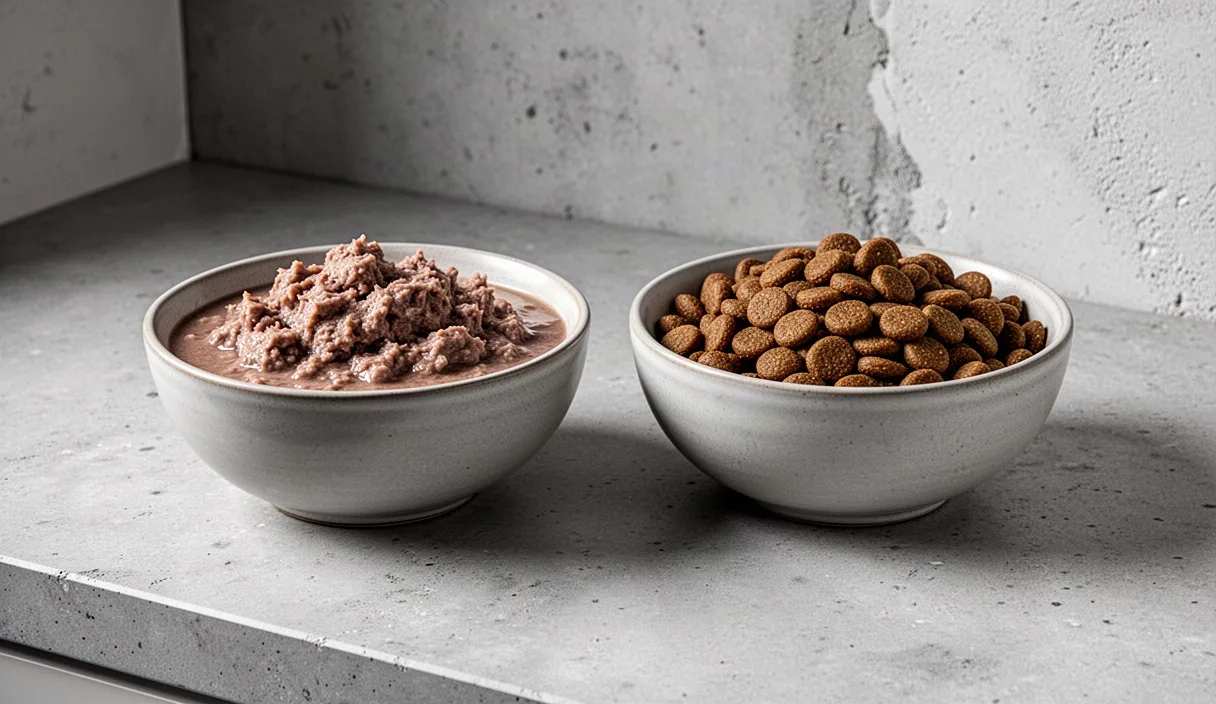
Wet food and dry food are not two versions of the same product. They are made with different water content, different processing methods, and different cost structures. A can of wet food is roughly 75 to 78 percent water. A bag of kibble is roughly 8 to 10 percent water. That single difference changes almost everything else: how the food is preserved, how it wears on teeth, how much it costs per feeding, and how fast it spoils once opened.
This article breaks down what each format actually does, not what marketing copy claims it does. The goal is to help you match the food to the cat or dog in front of you, and to combine both formats correctly if that is what your feeding plan calls for. For any diet change tied to a medical condition such as kidney disease, metabolic balance, or dental disease, talk to a veterinarian before switching formats.
What Wet Food Contains That Dry Food Does Not
The defining trait of wet food is water. A typical 5.5-ounce can of cat food contains about 4 ounces of water. That water is not filler, it is functional: cats in particular have a low thirst drive and historically got most of their fluid from prey, not from a water bowl. Dogs and cats on wet-food-only diets tend to take in more total moisture per day than those on dry food alone, even with a full water bowl available.
Wet food is also processed differently. It is mixed, then sealed in a can or pouch, then heat-sterilized in the container. Because the sterilization happens after sealing, manufacturers can use fresher, less processed protein sources and skip some of the binding starches that dry food needs to hold its shape. That is why wet food ingredient lists often show meat or meat by-products as the first two or three ingredients, with fewer grains or starches overall.
The tradeoff is nutrient density. Because a third of the can by weight is water, a cat eating only wet food has to eat a larger volume of product to get the same calories as a smaller volume of kibble. A 5.5-ounce can of adult cat food typically provides 150 to 190 calories. A cup of dry cat food typically provides 300 to 400 calories. This is why portion labels differ so much between the two formats, and why switching a pet from one to the other without recalculating portions is a common source of over- or underfeeding.
How Dry Food Is Made and Why It Stores Longer
Dry food is made through extrusion. Ingredients are ground, mixed with water and steam, then forced through a machine called an extruder under high heat and pressure. The mixture expands as it exits, is cut into pieces, then dried in an oven to bring moisture down to single digits. This process is why kibble has that uniform shape and why it needs starch, usually from corn, rice, wheat, or potato, to bind and expand properly during extrusion.
The low moisture content is what gives dry food its shelf stability. Bacteria and mold need water to grow. At 8 to 10 percent moisture, dry food falls below the threshold most spoilage organisms need to establish themselves, so an unopened bag can sit on a shelf for 12 to 18 months without refrigeration, depending on the manufacturer's stated shelf life printed on the bag.
Dry food also gets a fat coating sprayed on after extrusion, usually animal fat or vegetable oil, which is where most of the aroma and palatability comes from. This coating is also the first thing to go rancid once a bag is opened and exposed to air, which is why dry food does have a use-by clock once opened, even though the unopened shelf life is long. Manufacturers generally recommend using an opened bag within 6 weeks for best quality, even though it will not necessarily make an animal sick after that window.
Cost Per Feeding: A Simple Comparison
Wet food usually costs more per calorie than dry food. This is a direct result of the water content: you are paying shipping and packaging costs on a product that is mostly water, and the can or pouch itself costs more to produce than a plastic bag. A rough comparison for a 10-pound adult cat:
| Format | Daily amount | Approx. cost per day | Approx. cost per month |
|---|---|---|---|
| Dry food, mid-range brand | 1/2 cup (about 200 calories) | $0.35 to $0.55 | $10 to $17 |
| Wet food, mid-range brand | 1.5 cans (about 260 calories) | $1.80 to $2.70 | $54 to $81 |
| Mixed feeding (half and half by calories) | 1/4 cup + 1 can | $1.00 to $1.50 | $30 to $45 |
These figures move a lot based on brand tier. A prescription or limited-ingredient wet diet can run $2 to $4 per can, which doubles the monthly cost shown above. Dry food prices are more stable across tiers because the base ingredients, grains and rendered meals, cost less than the whole-cut proteins used in premium wet formulas.
Dental Effects of Each Texture
The claim that dry food "cleans teeth" is only partly true and worth unpacking. Kibble does require chewing, and the mechanical action of biting through a hard piece can scrape some soft plaque off the tooth surface. But most cats and small dogs do not chew kibble the way the marketing image suggests. Many swallow pieces whole or crack them once and swallow, especially smaller breeds and cats with narrow jaws. Actual measurable dental benefit is mostly seen with kibble specifically engineered to be larger and more fibrous, sold as dental-formula diets, not with standard bag kibble.
Wet food leaves more residue on the tooth surface and along the gumline because it is soft and sticks rather than shattering. Over time, that residue combines with saliva to form plaque, which hardens into tartar if not removed. Cats and dogs on wet-only diets are not automatically at higher risk of dental disease, but they typically need more active dental care, brushing, dental chews, or professional cleanings, to compensate for the lack of abrasive texture.
Neither format is a substitute for brushing or veterinary dental checkups. If you see red gums, bad breath beyond the normal range, or a pet pawing at its mouth, that is a reason to see a vet, not a reason to switch food formats on your own.
Storage and Spoilage Timelines
Unopened dry food lasts 12 to 18 months from the production date, which is usually printed as a best-by date on the bag. Once opened, quality drops steadily due to fat oxidation and moisture absorption from the air, even if the bag is resealed. Store opened dry food in its original bag inside an airtight container, kept somewhere cool and dark, and aim to finish it within 6 weeks.
Unopened canned wet food has a shelf life of 2 to 5 years depending on the manufacturer, because the can is sterilized and hermetically sealed. Once opened, the clock moves fast: refrigerate leftover wet food immediately and discard anything left out at room temperature for more than 2 to 4 hours, especially in warm weather. An opened can should be used within 3 days even under refrigeration, and always check for a sour smell or discoloration before serving leftovers.
Pouches and fresh-format wet foods, the kind sold in refrigerated pet store cases, have shorter windows than canned food, often just a few days once opened, and some require freezing until use. Read the specific package instructions rather than assuming all wet formats behave like a shelf-stable can.
How to Combine Both in One Feeding Plan
Mixed feeding is a common approach and works well for many households, but it requires doing the math instead of guessing. Start by finding the calories per can or pouch of wet food and the calories per cup of dry food, both printed on the label or available from the manufacturer's website. Decide what percentage of daily calories you want from each format, commonly a 50/50 split by calorie, then calculate the portions.
- Find your pet's daily calorie need, either from the food label's feeding chart or from your veterinarian.
- Split that number by your chosen ratio, for example 50 percent wet, 50 percent dry.
- Divide each half by the calories per unit of that food, can or cup, to get the portion size.
- Serve wet food at one or two set mealtimes and leave dry food available separately, or split both across meals.
- Recheck body weight monthly for the first two months after starting a mixed plan, since combined feeding is easier to overfeed than a single format with a printed chart.
A practical example: a 10-pound cat needing about 220 calories a day, split 50/50, would get about 110 calories from wet food, roughly two-thirds of a 5.5-ounce can, and about 110 calories from dry food, roughly a scant third of a cup, depending on the brand's exact calorie density.
Common Mistakes
Feeding the same volume of wet and dry food as if they were interchangeable cup for cup, without adjusting for the calorie difference, is the most frequent error and a common cause of weight gain. Another is leaving wet food out all day for free feeding, which lets it spoil within hours and invites pests. A third is assuming any dry food will clean teeth simply because it is hard, when only specific dental-formula kibbles have been shown to make a measurable difference. Finally, switching formats abruptly, especially into or out of wet food, can cause digestive upset; transition over 5 to 7 days by mixing increasing amounts of the new food into the old.
Next Steps
Check the calorie content per can and per cup on the products you currently buy, since that number, not the marketing claims on the front of the package, tells you what a fair portion actually looks like. If your pet has a diagnosed condition such as obesity, kidney disease, or dental disease, bring both food labels to your next vet visit and ask for a written feeding plan rather than relying on the bag's general chart. And if you are moving toward a mixed feeding plan, track weight every two to four weeks for the first couple of months to confirm the portions you calculated are actually holding steady rather than trending up or down.